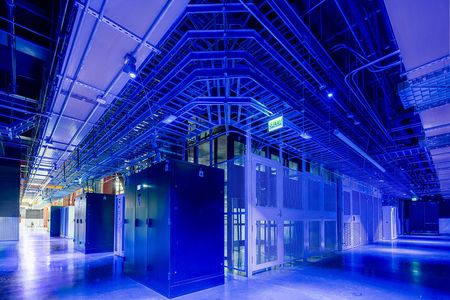
data centers
54 TopicsHow Enterprises Can Prepare for Quantum Computing Security Threats
As quantum computing moves from research labs into the enterprise, it introduces a critical threat to current public key encryption through "harvest now, decrypt later" attacks. In this episode of Interconnected, experts from Equinix and Accenture discuss how to navigate this transition by building a quantum-safe security roadmap and embracing crypto-agility. You’ll learn how to protect critical infrastructure—from power grids to cloud platforms—by modernizing your security posture today. Watch the full video to discover how to future-proof your digital infrastructure against the quantum reality. 3Views1like1Comment
Solving CMDB Data Quality Challenges at Equinix
Configuration Management Databases (CMDBs) are critical for managing enterprise IT infrastructure, but they frequently suffer from data quality issues that undermine their value. At Equinix, managing infrastructure relationships across hundreds of data centers globally presented unique challenges requiring location-specific relationship hierarchies while ensuring data consistency. This white paper presents a comprehensive methodology developed and implemented at Equinix for addressing common CMDB data quality issues including duplicate records, circular dependencies, inconsistent hierarchies, and self-referential relationships. The solution employs an iterative processing approach that preserves location-specific context (IBX-aware processing) while systematically eliminating data quality problems across the global data center footprint. Key outcomes of this approach include automated cycle detection and breaking, recursive relationship removal, intelligent top-node identification, and location-aware duplicate elimination, all while maintaining full traceability through comprehensive data export at each processing step. The Business Problem CMDB Data Quality Crisis Organizations managing infrastructure across multiple data centers face significant challenges with CMDB data quality. At Equinix, with over 240 data centers across 70+ metro areas globally, these challenges are particularly acute. Data quality issues manifest in several critical ways: Duplicate Relationships: The same parent-child relationship appears multiple times in the database, creating confusion about the actual infrastructure topology Circular Dependencies: Device A depends on Device B, which depends on Device C, which depends back on Device A, creating impossible-to-resolve relationship loops Self-Referential Records: Devices incorrectly listed as their own parent or child, violating basic hierarchical principles Recursive Relationships: Bidirectional relationships (A→B and B→A) that should be unidirectional hierarchies Missing Top Nodes: Parent devices referenced in relationships but not appearing as nodes in their own right, creating incomplete hierarchies Location-Specific Complexity: Need to maintain separate but accurate hierarchies for each data center (IBX) while processing data in a unified manner Business Impact Poor CMDB data quality has tangible business consequences: Operational Inefficiency: Teams cannot trust the CMDB, leading to manual verification of infrastructure relationships Incident Response Delays: During outages, incorrect dependency information leads to longer mean-time-to-resolution Change Management Risk: Impact analysis becomes unreliable when circular dependencies or missing relationships exist Capacity Planning Errors: Duplicate relationships inflate dependency counts, leading to overestimation of required resources Audit and Compliance Issues: Inaccurate infrastructure documentation creates compliance risks and audit findings Technical Challenges Location-Aware Processing Multi-site operations introduce a critical dimension to data quality management. At Equinix, the same device name may legitimately exist in different IBX (Internet Business Exchange) facilities, but these must be treated as distinct entities. Traditional deduplication approaches that ignore location context will incorrectly merge relationships from different data centers, destroying the integrity of location-specific hierarchies. The solution maintains IBX awareness throughout all processing stages, ensuring that relationships are only compared and deduplicated within the same physical Equinix facility. This requires creating composite keys that combine device identifiers with IBX location information. Cycle Detection at Scale Detecting cycles in directed graphs is a classic computer science problem, but applying it to real-world CMDB data introduces practical challenges: Performance: Naive cycle detection algorithms can have poor time complexity on large datasets with thousands of relationships Breaking Strategy: Once cycles are detected, determining which relationship to remove requires business logic, different strategies produce different hierarchies Location Boundaries: Cycles must be detected within location-specific subgraphs to avoid incorrectly identifying cross-location paths as cycles Traceability: Organizations need to know which relationships were removed and why, requiring comprehensive logging Iterative Duplicate Resolution Simple duplicate removal is insufficient for CMDB data. As the algorithm processes and transforms the data, new duplicates can emerge. For example, when creating unique identifiers for nodes that appear multiple times at different hierarchy levels, the system must iteratively check for and resolve duplicates until no new duplicates are introduced. This requires a convergence strategy with safeguards against infinite loops, typically implemented with a maximum iteration limit combined with duplicate detection at each stage. Memory Management Processing large CMDB datasets with Python pandas requires careful memory management. Each transformation creates new DataFrames, and without explicit memory cleanup, the process can exhaust available RAM. The solution implements strategic garbage collection and DataFrame cleanup after each processing stage. Solution Architecture Processing Pipeline Overview The solution implements a multi-stage processing pipeline: Data Ingestion: Read source data from Excel, combining device names with asset tags to create unique identifiers Preprocessing: Remove duplicates, self-references, and recursive relationships; detect and break cycles Top Node Identification: Find parent nodes not appearing as children and add them explicitly to the hierarchy Unique Identifier Creation: Append location and formatting markers to create globally unique node identifiers Iterative Deduplication: Process relationships to assign unique indices, repeating until no duplicates remain Output Generation: Clean identifiers and export final results with comprehensive audit trail Key Components Cycle Detection Engine The cycle detection algorithm uses depth-first search (DFS) within each location group. It builds an adjacency list representation of the relationship graph and performs DFS from each node, tracking the current path. When a node is encountered that's already in the current path, a cycle is detected. The cycle-breaking strategy removes the last relationship in each detected cycle. This approach minimizes disruption to the hierarchy while ensuring acyclicity. All removed relationships are logged for audit purposes. Location-Aware Deduplication Deduplication uses composite keys that combine device identifiers with location (IBX) information. This ensures that: Relationships are only deduplicated within the same physical location Cross-location relationships are preserved even if device names are identical Location context is maintained throughout all transformations Comprehensive Export System To ensure full traceability and enable troubleshooting, the system exports data at every significant processing step: Raw input data and initial transformations Identified duplicates, self-references, and cycles Relationships removed during preprocessing State at each iteration of duplicate resolution Final cleaned results and summary statistics All exports include timestamps and are organized in a dedicated output directory, creating a complete audit trail of the data cleaning process. Methodology Detailed Processing Flow The data cleaning process follows a systematic, step-by-step approach grounded in Directed Acyclic Network (DAN) theory to transform raw CMDB data into a clean, hierarchical structure. Each step builds upon the previous one, with validation checkpoints to ensure data integrity throughout the transformation. Step-by-Step Process Data Preparation and Normalization - Clean up the names of parent and child configuration items (CIs) by removing extraneous whitespace, standardizing casing, and normalizing special characters. This ensures consistent string matching in subsequent steps. Asset Tag Integration - Combine device names with their asset tags using a standardized delimiter (e.g., 'DeviceName#AssetTag'). This creates more specific identifiers that distinguish between devices with identical names but different physical assets. Composite Key Creation - Create composite keys for uniqueness checking by concatenating: Parent + '_' + Child + '_' + IBX. This three-part key ensures that relationships are evaluated within their proper location context. Initial Deduplication - Drop exact duplicates using the composite key. This eliminates redundant relationship records that represent the same parent-child-location tuple multiple times in the source data. Recursive Relationship Removal - Remove direct recursive relationships (A→B and B→A) within the same IBX. The algorithm identifies bidirectional pairs by creating normalized relationship keys (sorted alphabetically) and retains only the first occurrence, breaking the bidirectional cycle. Cycle Detection and Breaking - Detect and break cycles in relationships within each IBX group using Directed Acyclic Network (DAN) theory. The algorithm employs depth-first search to identify circular dependency chains. When a cycle is detected, it is broken at the longest relationship chain to minimize disruption to the overall hierarchy structure. The system returns a DataFrame with all cycles eliminated and logs the removed relationships for audit purposes. Self-Reference Filtering - Filter out self-referential records where a node incorrectly lists itself as its own parent within the same IBX. These logically invalid relationships are removed to maintain hierarchical integrity. Top Node Identification - Add true top nodes to the hierarchy by calculating: top_nodes = unique_parents - unique_nodes. This set operation identifies parent devices that never appear as children, representing the roots of the hierarchy. These top nodes are explicitly added as self-referential records. Unique Identifier Creation - Create globally unique identifiers by appending location markers: Node = Node + '__' + IBX + '{'. This format ensures that nodes with identical names in different IBX facilities have distinct identifiers throughout all subsequent processing. Hierarchy Flattening via DAN - Flatten out the hierarchy structure using Directed Acyclic Network principles. This process assigns unique indices to nodes that appear multiple times at different hierarchy levels, creating distinct node instances (Node1, Node2, etc.) while preserving the acyclic property of the graph. Iterative Duplicate Resolution - After each transformation iteration, check for duplicates within each IBX. The system asks: "Are there any duplicates?" If duplicates are detected, the process repeats steps 9-11 until no new duplicates emerge or a maximum iteration limit (50) is reached. This iterative convergence ensures complete deduplication even in complex, multi-level hierarchies. Data Persistence Store the cleaned results in both CSV and SQL formats. CSV files provide portability and easy inspection, while SQL storage enables efficient querying and integration with downstream systems. View Creation Create desired views from the cleaned data to support different analytical perspectives. Views include parent-child relationship hierarchies, bottom-node summaries, customer assignment mappings, and business rule compliance matrices. Report Development Build reports in Power BI according to established business rules. Reports validate data quality (e.g., circuit parent class validation), track location-specific metrics, analyze customer assignment gaps, and measure hierarchy depth distributions. Theoretical Foundation: Directed Acyclic Network (DAN) Theory The methodology leverages Directed Acyclic Network theory as its mathematical foundation. In graph theory, a DAG is a directed graph with no directed cycles, making it an ideal structure for representing hierarchical relationships. The core principles applied include: Topological Ordering: Once cycles are broken, the resulting DAG can be topologically sorted, providing a clear hierarchy from top nodes to leaf nodes Transitive Reduction: The flattening process identifies and eliminates redundant transitive relationships while preserving the essential hierarchy structure Path Analysis: DFS traversal enables efficient detection of cycles and calculation of path lengths, which are used for breaking cycles at optimal points Acyclicity Guarantee: The iterative process ensures that the final graph structure maintains the acyclic property required for valid hierarchical relationships This theoretical grounding ensures that the data cleaning process produces mathematically sound hierarchies that can reliably support downstream automation and analysis. Phase 1: Data Ingestion and Preparation The process begins by reading relationship data from an API or Excel, typically exported from a CMDB system. The source data includes: Parent: The parent device in the relationship Child: The child device in the relationship Device IBX: The physical location identifier Parent_Asset_tag: Asset tag for the parent device Child_Asset_tag: Asset tag for the child device Device names are combined with their asset tags using a delimiter (e.g., 'DeviceName#AssetTag') to create more specific identifiers. This addresses cases where multiple devices share the same name but have different asset tags. Phase 2: Preprocessing and Cleaning The preprocessing phase systematically eliminates various data quality issues: Step 1: Composite Key Deduplication Create composite keys combining Parent + Node + IBX and remove exact duplicates. This eliminates redundant relationship records while preserving location specificity. Step 2: Self-Reference Removal Filter out records where Parent equals Node within the same IBX. These self-referential relationships are logically invalid and must be removed. Step 3: Recursive Relationship Detection Identify and remove bidirectional relationships (A→B and B→A) within the same location. The algorithm: Creates a normalized relationship pair key by sorting Parent and Node alphabetically and including IBX Identifies duplicates by this normalized key Keeps only the first occurrence, removing the reverse relationship Step 4: Cycle Detection and Breaking For each IBX group: Build an adjacency list graph representation of relationships Perform DFS from each node, tracking the current traversal path When a node in the current path is re-encountered, record the cycle For each cycle, remove the last relationship to break it Export all detected cycles and removed relationships for audit Step 5: Top Node Identification The algorithm identifies nodes that appear as parents but never as children within each IBX. These represent the top of the hierarchy and must be explicitly added as nodes: Extract unique Parent+IBX combinations Extract unique Node+IBX combinations Find parents that don't appear as nodes (set difference) Create self-referential records for these top nodes (Parent=Node) Phase 3: Unique Identifier Creation To enable subsequent processing, the system creates globally unique identifiers by appending location and formatting markers: Node becomes: NodeName__IBX{ This format ensures that nodes with the same name in different locations have distinct identifiers throughout processing. Phase 4: Iterative Duplicate Resolution The core processing algorithm handles cases where the same node appears multiple times in the hierarchy at different levels: Grouping: Group relationships by Node+IBX and assign sequential indices Unique Node Creation: Append index to node identifier (Node1, Node2, etc.) Parent Processing: Similarly create unique parent identifiers Relationship Merging: Merge processed nodes with their parents, preserving IBX context Duplicate Check: Check for duplicates within each IBX If duplicates remain, the process repeats (up to a maximum iteration limit of 50). This iterative approach ensures convergence even for complex hierarchies with multiple levels of duplication. Phase 5: Output and Validation The final phase cleans the data for output: Remove formatting markers: Strip the '__IBX{' suffixes to restore original node names Preserve processed identifiers: Keep the uniquified versions for reference Export results: Write to CSV with both original and processed values Generate summary: Create summary statistics including record count, IBX groups, and duplicate status Final validation: Check for any remaining duplicates within each IBX and report status Implementation Highlights Technology Stack Component Purpose Python 3.x Core programming language for data processing and algorithm implementation Pandas DataFrame operations, grouping, merging, and data manipulation NumPy Numerical operations and array processing Collections defaultdict for efficient adjacency list construction in cycle detection gc Module Explicit garbage collection for memory management in large dataset processing Performance Optimizations Memory Management The implementation includes strategic memory management: Explicit deletion of intermediate DataFrames after they're no longer needed Garbage collection calls at key processing stages Selective column retention to minimize memory footprint Vectorized Operations Pandas vectorized operations are used throughout to avoid Python loops: String operations use .str accessor for vectorization Boolean masking for filtering instead of iterative row removal groupby operations for location-specific processing Set Operations Top node identification uses Python sets for O(1) lookup performance when finding the difference between parent and node populations. This is significantly faster than DataFrame-based approaches for large datasets. Results and Impact Data Quality Improvements The methodology delivers measurable data quality improvements: Issue Type Resolution Duplicate Relationships 100% elimination via composite key deduplication Circular Dependencies Detected and broken with full audit trail Self-Referential Records Removed (except legitimate top nodes) Recursive Relationships Systematically identified and eliminated Missing Top Nodes Automatically identified and added to hierarchy Location Context Preserved throughout all processing stages Operational Benefits Improved CMDB Trustworthiness: Teams can confidently rely on the CMDB for operational decisions Faster Incident Resolution: Accurate dependency information enables quicker root cause analysis Better Change Management: Impact analysis becomes reliable with clean relationship data Accurate Capacity Planning: Elimination of duplicate relationships provides true infrastructure counts Audit Readiness: Complete audit trail documents all data quality improvements Operational Dashboard To make data quality improvements accessible to non-technical users, a Power BI dashboard was developed providing real-time visibility into CMDB health across the global IBX footprint. Data Integration The dashboard connects to cleaned CMDB data via Power Query, loading the final CSV export from the processing pipeline. The integration handles proper encoding (Windows-1252), header promotion, empty record filtering, and text normalization while preserving key relationship fields (Parent, Node, unique identifiers). Key Reports The dashboard features four analytical views addressing different operational needs: Top Most Parent Class vs Bottom Node Class by Occurrence Visualizes relationship hierarchy structure showing which top-level parent classes connect to bottom-level node classes. Identifies common infrastructure patterns and reveals unexpected class combinations that may indicate data quality issues. The report includes business rule validation that flags violations where AC Circuit or DC Circuit nodes have parent classes other than Switchgear or Generator. Nodes Violate Business Rules by IBX Tracks configuration items that don't comply with established business rules, broken down by physical location. Enables site managers to prioritize remediation efforts and identify systematic issues requiring process changes. Node Occurrences without Customers by IBX Identifies infrastructure assets not associated with customers, potentially indicating decommissioned equipment, staging areas, or relationship mapping gaps. Distinguishes between total occurrences and unique bottom nodes to support capacity utilization reporting. Node Occurrences without Customers by Path Length Analyzes distribution of customer-less nodes across hierarchy depths. Pinpoints specific levels where relationship mapping breaks down and validates completeness of automated discovery tools. User Experience The dashboard employs intuitive design principles for non-technical users: Tab-based navigation with clear report labels Color-coded metrics (Green/Yellow/Red) for quick status assessment Interactive drill-down from summaries to detailed records Cross-filtering between reports for multi-dimensional analysis Export capabilities for remediation workflows Impact Since deployment, the dashboard has delivered measurable benefits: Significant reduction in time to identify data quality issues Improved accountability through location-specific metrics Faster remediation cycles via self-service issue identification Enhanced executive visibility into data quality trends Reduced support requests to CMDB teams Traceability and Auditability Comprehensive data exports at each processing stage create an audit trail documenting: All detected duplicates, cycles, and self-referential records Relationships removed during preprocessing and cycle breaking State of the data at each iteration of the processing pipeline Final cleaned results with summary statistics This traceability ensures organizations can validate and understand the data cleaning actions taken, supporting both operational use and compliance requirements. Best Practices and Lessons Learned Location Context is Critical In multi-site operations, never process relationship data without location context. The same device name in different locations represents different physical assets. All deduplication, cycle detection, and hierarchy processing must be location-aware. Iterative Processing is Essential Data quality issues are interdependent. Removing one type of issue can create new instances of another. An iterative approach with convergence checking is necessary to achieve truly clean data. Always include a maximum iteration limit to prevent infinite loops. Export Everything for Debugging Exporting data at every processing stage initially seems excessive but proves invaluable for: Troubleshooting when results don't match expectations Understanding what changes occurred and why Auditing and explaining results to stakeholders Identifying patterns in data quality issues Memory Management Matters For large CMDB datasets, proactive memory management is not optional. Implement explicit cleanup of intermediate DataFrames and strategic garbage collection. Monitor memory usage during development and optimize before moving to production. Test with Real Data Synthetic test data rarely captures the full complexity of real CMDB data quality issues. Use production data (anonymized if necessary) during development to ensure the solution handles actual edge cases. Document Cycle-Breaking Decisions The choice of which relationship to remove when breaking a cycle impacts the resulting hierarchy. Document the strategy clearly and export all removed relationships. Consider whether alternative strategies (remove shortest path, remove oldest relationship, etc.) might be more appropriate for specific use cases. Validate Results Always implement final validation checks: Verify no duplicates remain within each location Confirm no circular dependencies exist Check that record counts match expectations Sample-check relationships for logical consistency Future Enhancements Machine Learning for Duplicate Detection Future versions could incorporate machine learning to identify fuzzy duplicates, relationships that are semantically equivalent despite differences in naming or formatting. This would catch cases that composite key matching misses. Intelligent Cycle-Breaking Strategies Currently, the system removes the last relationship in a cycle. More sophisticated approaches could consider: Relationship confidence scores (remove the least confident) Temporal data (remove the most recently added relationship) Relationship type hierarchy (preserve certain types over others) Real-Time Processing The current implementation is batch-oriented. A streaming version could process CMDB updates in real-time, preventing data quality issues from accumulating rather than cleaning them after the fact. Migration to Modern Architecture The data quality improvements achieved through this methodology serve as a foundation for migrating to next-generation configuration management architectures. Once legacy data is cleaned and validated, organizations can transition to immutable, version-controlled model stores that prevent data quality issues through architectural design rather than retrospective cleanup. The cleaned data provides a trustworthy baseline for such migrations, while the location-aware processing approach aligns with modern multi-tenant, sharded architectures. Conclusion CMDB data quality is a persistent challenge in enterprise IT operations, particularly for organizations managing infrastructure across multiple geographic locations. This white paper has presented a comprehensive methodology developed and implemented at Equinix for systematically addressing the most common data quality issues: duplicates, cycles, self-references, recursive relationships, and missing hierarchy nodes. The solution combines established graph algorithms with IBX-aware processing and iterative refinement to achieve clean, trustworthy CMDB data across Equinix's global data center footprint. By maintaining full traceability through comprehensive data exports at every processing stage, the approach enables both operational use and audit requirements. Key success factors include rigorous location context preservation, iterative duplicate resolution, strategic memory management, and extensive validation. Organizations implementing similar approaches should prioritize testing with real data, documenting all transformation decisions, and maintaining comprehensive audit trails. As CMDBs continue to grow in size and complexity, automated data quality management becomes not just beneficial but essential. The techniques described in this paper provide a foundation that can be extended with machine learning, real-time processing, and tighter CMDB platform integration to meet future operational needs. Clean CMDB data is not a luxury, it's a prerequisite for effective IT operations, incident management, change control, and capacity planning. By investing in systematic data quality management, organizations can transform their CMDB from a questionable reference into a trusted source of truth. Appendix: Technical Reference Key Terminology Term Definition CMDB Configuration Management Database, a repository of IT infrastructure information and relationships IBX Internet Business Exchange, Equinix's designation for their data center facilities globally Cycle A circular dependency where following parent-child relationships leads back to the starting node Top Node A node that appears as a parent but never as a child, the root of a hierarchy DFS Depth-First Search, a graph traversal algorithm used for cycle detection Composite Key A unique identifier created by combining multiple fields (e.g., Parent + Node + IBX) Processing Metrics Organizations can track the following metrics to measure data quality improvement: Duplicate Rate: Percentage of relationships that are duplicates Cycle Count: Number of circular dependencies detected Self-Reference Count: Number of nodes incorrectly referencing themselves Missing Top Nodes: Number of hierarchy roots that were missing Iteration Count: Number of processing iterations required for convergence Processing Time: Total time required for complete data cleaning Clean Rate: Percentage of relationships requiring no cleanup Code Sample: Core Implementation The following code excerpt demonstrates the key cycle detection logic that implements Directed Acyclic Network theory with IBX-aware processing. import pandas as pd from collections import defaultdict def detect_and_break_cycles(df: pd.DataFrame) -> pd.DataFrame: """ Detect and break cycles using DFS within each IBX group. Returns DataFrame with cycles eliminated. """ def find_cycles_in_group(group_df: pd.DataFrame, ibx: str): # Build adjacency list representation graph = defaultdict(list) for _, row in group_df.iterrows(): graph[row['Parent']].append(row['Node']) cycles = set() visited = set() def dfs(node: str, path: list): if node in path: # Cycle detected - record it cycle_start = path.index(node) cycle = tuple(sorted(path[cycle_start:])) cycles.add(cycle) return if node in visited: return visited.add(node) path.append(node) for neighbor in graph.get(node, []): dfs(neighbor, path[:]) path.pop() # Run DFS from each node for node in list(graph.keys()): if node not in visited: dfs(node, []) return cycles # Process each IBX independently result_dfs = [] for ibx, group in df.groupby('IBX'): cycles = find_cycles_in_group(group, ibx) if not cycles: result_dfs.append(group) continue # Break cycles by removing last relationship in chain group_copy = group.copy() for cycle in cycles: cycle_relationships = group_copy[ (group_copy['Parent'].isin(cycle)) & (group_copy['Node'].isin(cycle)) ] if not cycle_relationships.empty: # Remove the relationship that completes the cycle last_rel = cycle_relationships.iloc[-1] mask = ~((group_copy['Parent'] == last_rel['Parent']) & (group_copy['Node'] == last_rel['Node'])) group_copy = group_copy[mask] result_dfs.append(group_copy) return pd.concat(result_dfs, ignore_index=True) def identify_top_nodes(df: pd.DataFrame) -> pd.DataFrame: """Identify hierarchy roots using set difference operation""" # Create IBX-aware composite keys df['Parent_IBX_Key'] = df['Parent'] + '_' + df['IBX'] df['Node_IBX_Key'] = df['Node'] + '_' + df['IBX'] # Set difference to find top nodes unique_parents = set(df['Parent_IBX_Key'].unique()) unique_nodes = set(df['Node_IBX_Key'].unique()) top_nodes = unique_parents - unique_nodes # Create self-referential records for top nodes top_node_records = [] for composite_key in top_nodes: node, ibx = composite_key.rsplit('_', 1) top_node_records.append({'Parent': node, 'Node': node, 'IBX': ibx}) return pd.DataFrame(top_node_records) Implementation Notes: This code demonstrates the core principles: DFS Cycle Detection: Depth-first search within location-specific subgraphs • IBX Awareness: Processing groups independently to maintain location context Set Operations: O(1) performance for top node identification Strategic Cycle Breaking: Removes last relationship in chain to minimize hierarchy disruption The full implementation includes comprehensive audit trail exports, iterative duplicate resolution, and memory management optimizations.505Views0likes0CommentsThe Innovation and Infrastructure of Online Gaming
Ready to see how the gaming industry is building the future of the internet? In the latest episode of Interconnected, hosts Shaneil Lafayette and Thomas Gould sit down with industry heavyweights Royal O’Brien (CEO of Expanxia) and Wesley Kuo (CEO of Ubitus) to discuss why gaming is actually the most important R&D engine in tech history. Listen to the extended podcast version on Apple or Spotify: Apple Podcasts: https://eqix.it/3XsaMCt Spotify: https://eqix.it/48fqarV 390Views0likes0Comments
Manual do Mundo visits the cloud
Ever wonder where the "cloud" actually is? Manual do Mundo teamed up with Equinix to physically visit it! We went inside a gigantic Data Center—the digital cloud—where your videos, messages, and all your online content are stored. Watch the full video here! 422Views1like0Comments
How Merck KGaA, Darmstadt, Germany Is Leveraging AI to Advance Scientific Discovery
Imagine accelerating the journey from raw data to life-changing discovery—that's exactly what's happening with the new high-performance data center from Merck KGaA, Darmstadt, Germany, built in collaboration with Lenovo and hosted in one of Equinix's AI-ready data centers. This powerful new platform is empowering Merck's teams to leverage Artificial Intelligence (AI) for scientific discovery and advanced analytics more effectively, ultimately accelerating the pace of innovation. FAQs: Q: What is high-performance computing (HPC)? A: High-performance computing explained: HPC refers to the use of supercomputers and parallel processing techniques to solve complex computational problems. In this video, we explore how Merck KGaA is leveraging HPC to accelerate innovation. Q: How do liquid cooling systems improve HPC performance? A: Liquid cooling systems efficiently remove heat at the source, enabling high-performance workloads to run without compromising speed or energy efficiency. Q: Why is hybrid cloud infrastructure important for innovation? A: Hybrid cloud infrastructure combines private and public cloud infrastructure, offering flexibility, scalability, and cost optimization — key factors for driving scientific breakthroughs and how AI is transforming innovation and discovery. 407Views0likes0Comments
Your AI Network Blueprint: 7 Critical Questions for Hybrid and Multicloud Architects
Artificial Intelligence (AI) has moved beyond the lab and is now the engine of digital transformation, driving everything from real-time customer experiences to supply chain automation. Yet, the true performance of an AI model—its speed, reliability, and cost-efficiency doesn't just depend on the GPUs or the data science; it depends fundamentally on the network. For Network Architects, AI workloads present a new and complex challenge: how do you design a network that can handle the massive, sustained bandwidth demands of model training while simultaneously meeting the ultra-low-latency, real-time requirements of model inference? The wrong architecture can lead to GPU clusters sitting idle, costs skyrocketing, and AI projects stalling. In this deep-dive, we tackle the seven most critical networking questions for building a high-performance, cost-optimized AI infrastructure: What are the networking differences between AI training and inferencing? How much network bandwidth do AI models really need? What’s the optimal way to interconnect GPU clusters and storage to minimize latency? What’s the most efficient way to transfer multi-petabyte AI datasets between clouds? Best practices for protecting AI training data in transit? How to architect for resiliency for AI in multicloud environments? What are my options for connecting edge locations to cloud for real-time AI? We’ll show you how Equinix Fabric and Network Edge can help you dynamically provision the right connectivity for every phase of the AI lifecycle from petabyte-scale data transfers between clouds to real-time inference at the edge, turning your network from a constraint into an AI performance multiplier. Ready to dive into the definitive network blueprint for AI success? Let's get started. Q: What are the networking differences between AI training and inference? A. AI training and inference workloads impose distinct demands on connectivity, throughput, and latency, requiring network designs optimized for each phase. Training involves processing massive datasets, often multiple terabytes or more, across GPU clusters for iterative computations. This creates sustained, high-volume data flows between storage and compute, where congestion, packet loss, or latency can slow training and increase cost. Distributed training across multiple clouds or hybrid environments adds further complexity, demanding high-throughput interconnects and predictable routing to maintain synchronization and comply with data residency requirements. Inference workloads, by contrast, are latency-sensitive rather than bandwidth-heavy. Once a model is trained, tasks like real-time recommendations, image recognition, or sensor data processing depend on rapid network response times to deliver outputs close to users or devices. The network must handle variable transaction rates, distributed endpoints, and consistent policy enforcement without sacrificing responsiveness. A balanced approach addresses both needs: high-throughput interconnects accelerate data movement for training, while low-latency connections near edge locations support real-time inference. Equinix Fabric can enable private, high-bandwidth connectivity between on-premises, cloud, and hybrid environments, helping minimize congestion and maintain predictable performance. Equinix Network Edge supports the deployment of virtualized network functions (VNFs) such as SD-WAN or firewalls close to compute and edge nodes, allowing flexible scaling, optimized routing, and consistent policy enforcement without physical hardware dependencies. In practice, training benefits from robust, high-throughput interconnects, while inference relies on low-latency, responsive links near the edge. Using Fabric and Network Edge together allows architects to provision network resources dynamically, maintain consistent performance, and scale globally as workload demands evolve, all without adding operational complexity. Q: How much network bandwidth do AI models really need? A. Bandwidth needs vary depending on the type of workload, dataset size, and deployment model. During training, large-scale models process vast datasets and generate sustained, high-throughput data movement between storage and compute. If bandwidth is constrained, GPUs may sit idle, extending training time and increasing costs. In distributed or hybrid setups, synchronization between nodes further amplifies bandwidth requirements. Inference, in contrast, generates smaller but more frequent transactions. Although the per-request bandwidth is lower, the network must accommodate bursts in traffic and maintain low latency for time-sensitive applications such as recommendation engines, autonomous systems, or IoT processing. An effective strategy treats bandwidth as an elastic resource aligned to workload type. Training environments need consistent, high-throughput interconnects to support data-intensive operations, while inference benefits from low-latency connectivity at or near the edge to handle bursts efficiently. Equinix Fabric can provide private, high-capacity interconnections between cloud, on-prem, and edge environments, enabling bandwidth to scale with workload demand and reducing reliance on public internet links. Equinix Network Edge allows VNFs, such as SD-WAN or WAN optimization, to dynamically manage traffic, compress data streams, and apply policy controls without additional physical infrastructure. By combining Fabric for dedicated capacity and Network Edge for adaptive control, organizations can right-size bandwidth, keep GPUs efficiently utilized, and manage cost and performance predictably. Q: What’s the optimal way to interconnect GPU clusters and storage to minimize latency? A. The interconnect between GPU clusters and storage is critical for AI performance. Training large models requires GPUs to continuously pull data from storage, so any latency or jitter along that path can leave compute resources underutilized. The goal is to establish high-throughput, low-latency, and deterministic data paths that keep GPUs saturated and workloads efficient. Proximity plays a major role; placing GPU clusters and storage within the same colocation environment or campus minimizes distance and round-trip time. Direct, private connectivity between these systems avoids internet variability and security exposure, while high-capacity links ensure consistent synchronization for distributed workloads. A sound architecture combines both physical and logical design principles: locating compute and storage close together, using private interconnects to reduce variability, and applying software-defined tools for optimization. Virtual network functions such as WAN optimization, SD-WAN, or traffic acceleration can help reduce jitter and enforce quality-of-service (QoS) policies for AI data flows. Equinix Fabric enables private, high-bandwidth interconnections between GPU clusters, storage systems, and cloud regions, supporting predictable, low-latency data transfer. For multi-cloud or hybrid designs, Fabric can provide on-demand, dedicated links to GPU or storage instances without relying on public internet routing. Equinix Network Edge can host VNFs such as WAN optimizers and SD-WAN close to compute and storage, helping enforce QoS and streamline traffic flows. Together, these capabilities support low-latency, high-throughput interconnects that improve GPU efficiency, accelerate training cycles, and reduce overall AI infrastructure costs. Q: What’s the most efficient way to transfer multi-petabyte AI datasets between clouds? A. Transferring large AI datasets across clouds can quickly become a performance bottleneck if network paths aren’t optimized for sustained throughput and predictable latency. Multi-petabyte transfers often span distributed storage and compute environments, where even small inefficiencies can delay model training and inflate costs. Efficiency starts with minimizing distance and maximizing control. Locating GPU clusters and storage within the same colocation environment or interconnection hub reduces round-trip latency. Establishing direct, private connectivity between environments avoids the variability, congestion, and security exposure of internet-based routing. For distributed training, high-capacity links with deterministic paths are essential to keep GPU nodes synchronized and maintain steady data flows. A well-architected interconnection strategy blends physical proximity with logical optimization. Physically, high-density interconnection hubs reduce latency; logically, private, high-throughput connections and advanced VNFs such as WAN optimizers or SD-WAN enhance performance by reducing jitter and enforcing quality-of-service (QoS) policies. Equinix Fabric can facilitate this model by providing dedicated, high-bandwidth connectivity between clouds, storage environments, and on-premises infrastructure, helping ensure consistent performance for large data transfers. Equinix Network Edge complements this with traffic optimization, encryption, and routing control near compute or storage nodes. Together, these capabilities can help organizations move multi-petabyte datasets efficiently and predictably between clouds, while reducing costs and operational complexity. Q: What are best practices for protecting AI training data in transit? A. AI training frequently involves transferring large volumes of sensitive data across distributed compute, storage, and cloud environments. These transfers can expose data to risks such as interception, tampering, or non-compliance if not properly secured. To mitigate these risks, organizations should combine private connectivity, encryption, segmentation, and continuous monitoring to maintain data integrity and compliance. End-to-end encryption with automated key management ensures that data remains protected while in motion and satisfies regulations such as GDPR and HIPAA. Network segmentation and zoning isolate sensitive data flows from other traffic, while monitoring and logging help detect anomalies or unauthorized access attempts in real time. Private, dedicated interconnections—such as those available through Equinix Fabric—can strengthen these protections by keeping sensitive data off the public internet. These links provide predictable performance and deterministic routing, ensuring data stays within controlled pathways across regions and providers. Equinix Network Edge enables the deployment of VNFs such as encryption gateways, firewalls, and secure VPNs near compute or storage nodes, providing localized protection and traffic inspection without additional hardware. VNFs for WAN optimization or integrity checking can also enhance throughput while maintaining security. Together, these measures help organizations maintain confidentiality and compliance for AI data in transit, protecting sensitive assets while preserving performance and scalability. Q: How should I architect for resiliency in multicloud AI environments? A. AI workloads that span data centers and cloud environments demand resilient, high-throughput network architectures that can maintain performance even under failure conditions. Without proper design, outages or routing inefficiencies can delay model training, underutilize GPUs, or drive up egress costs. Building resiliency starts with private, high-bandwidth interconnects that avoid the variability of the public internet. Equinix Fabric supports this by enabling direct, software-defined connections between on-premises data centers, multiple cloud regions, and AI storage systems, delivering predictable performance and deterministic routing. Resilience also depends on flexible service provisioning. Equinix Network Edge enables VNFs such as firewalls, SD-WAN, or load balancers to be deployed virtually at network endpoints, allowing traffic steering, dynamic failover, and policy enforcement without physical appliances. Combining redundant Fabric connections across cloud regions with Network Edge-based failover functions helps ensure business continuity if a link or region goes down. Visibility is another key component. Continuous monitoring and flow analytics help identify congestion, predict scaling needs, and verify policy compliance. Integrating private interconnection, virtualized network services, and comprehensive monitoring creates a network foundation that maintains performance, controls costs, and keeps AI workloads resilient across a distributed, multicloud architecture. Q: What are my options for connecting edge locations to cloud for real-time AI? A. Real-time AI applications, such as autonomous vehicles, industrial IoT, or retail analytics, depend on low-latency, reliable connections between edge sites and cloud services. Even millisecond delays can affect inference accuracy and responsiveness. The challenge lies in connecting distributed edge locations efficiently while maintaining predictable performance and security. Traditional approaches like internet-based VPNs are easy to deploy but suffer from variable latency and limited reliability. Dedicated leased lines or MPLS circuits offer consistent performance but are costly and slow to scale across many sites. A more flexible option is to use software-defined interconnection and virtualized network functions. Equinix Fabric enables direct, private, high-throughput connections from edge locations to multiple clouds, bypassing the public internet to ensure predictable latency and reliability. Equinix Network Edge extends this model by hosting VNFs, such as SD-WAN, firewalls, and traffic accelerators, close to edge nodes. These functions provide localized control, dynamic routing, and consistent security enforcement across distributed environments. Organizations can also adopt a hybrid connectivity model, using private Fabric links for critical real-time traffic and internet-based tunnels for non-critical or backup flows. Combined with intelligent traffic orchestration and monitoring, this approach balances performance, resilience, and cost. The result is an edge-to-cloud architecture capable of supporting real-time AI workloads with consistency, flexibility, and scale.496Views1like0CommentsAutonomous Vehicles and The Future of Mobility
Autonomous technology is no longer a futuristic dream; it's rapidly becoming our reality. From robotaxis navigating city streets to drones delivering packages, machines are taking the wheel – and the skies – to move people and goods with unprecedented efficiency. But what truly powers every safe and reliable autonomous journey? It's the invisible digital systems working tirelessly behind the scenes. In the latest episode of Interconnected, join hosts Glenn Dekhayser and Simon Lockington as they delve into this crucial topic with MIT Research Scientist Bryan Reimer and Equinix VP of Market Development Petrina Steele. Discover how global infrastructure is evolving to support the next generation of autonomy. Key Highlights Edge computing enables vehicles to process and share data locally for faster, safer decisions. Low-latency connectivity determines how efficiently mission-critical computation moves between the car and the cloud. Multi-layer sensing and redundancy improve safety both inside and outside autonomous systems. Mining leads current automation efforts due to its regulated, closed environments and strong ROI. AI continues to enhance decision-making, learning and coordination across connected systems. Future autonomy will rely on open data marketplaces, adaptive energy grids and edge zones that blanket cities. 345Views0likes0Comments
Climate NYC Recap: Powering Progress: Grid Innovation, AI, and the Next U.S. Energy Transition
You're adopting AI at a breathtaking pace, and for good reason—it’s changing everything from personalized customer experiences to operational efficiency. But as you scale those exciting new workloads, have you stopped to think about the energy they consume? That was a central theme at Climate Week NYC, where our Equinix VP of Sustainability, Christopher Wellise, joined other industry leaders to discuss a critical, emerging truth: The rapid growth of AI and data centers is fundamentally reshaping the U.S. energy landscape, and the solutions are a lot smarter than you might think. “AI and data center growth are reshaping the energy landscape," said Christopher Wellise. "At Equinix, we’re committed to powering progress responsibly—through innovation, collaboration, and a future-first mindset.” Here’s a breakdown of the key takeaways from a customer perspective, focusing on what this means for your business continuity, sustainability goals, and future infrastructure planning. AI is driving exponential energy demand: Workload growth for AI is doubling every six months, with data centers projected to consume up to 12% of U.S. electricity in the near future. Data centers as grid assets: CW emphasized the shift from viewing data centers as “energy hogs” to recognizing their potential as contributors to grid stability. He spotlighted Equinix’s Silicon Valley site powered by solid oxide fuel cells, which generate electricity without combustion—reducing emissions and water use. Responsible AI in action: Equinix is using AI to create digital twins that optimize energy efficiency across facilities, showcasing how technology can drive sustainability. Collaboration is key: CW called for deeper partnerships across government, utilities, and tech providers to scale clean energy solutions and modernize infrastructure. Future First strategy: Equinix’s sustainability program continues to lead with a 100% clean and renewable energy target (currently at 96% globally), and active exploration of next-gen energy technologies like small modular reactors (SMRs). Check out the full video from Climate NYC306Views0likes0CommentsExploring Private AI Trends with AI Factories for the Enterprise
How can enterprises innovate faster with AI while protecting their most sensitive data? The answer lies in Private AI and dedicated AI Factories. In this Tech Talk, you'll learn: How to move beyond AI "experimentation" to practical business application The difference between Retrieval Augmented Generation (RAG) and model fine-tuning Why infrastructure modernization (power, cooling, and connectivity) is the critical constraint in today's AI race 259Views0likes0Comments
NetworkChuck: This is where Internet Lives
Imagine billions of dollars of tech, AI GPUs & LPUs, and the literal backbone of the internet, all humming along in one of the most secure buildings on Earth. We're talking about the secret sauce that makes the digital world go 'round, and NetworkChuck's taking us on an exclusive tour of Equinix DA11 & The Infomart! Be sure to share the LinkedIn post from Equinix! 798Views2likes1Comment